What Is Sintered Stone and Is It Right for Your Next Build?

Choosing the right countertop material is one of the most important decisions in any kitchen, bathroom, outdoor living space, or new construction project. Your surfaces need to match your style, withstand daily use, and support the long-term value of your home. One material that has become increasingly popular is sintered stone.

As countertop experts, Southern Stone & Cabinets explains what sintered stone is, how it performs, where it can be used, and what to consider before deciding if it is the right material for your next build.
What is Sintered Stone?

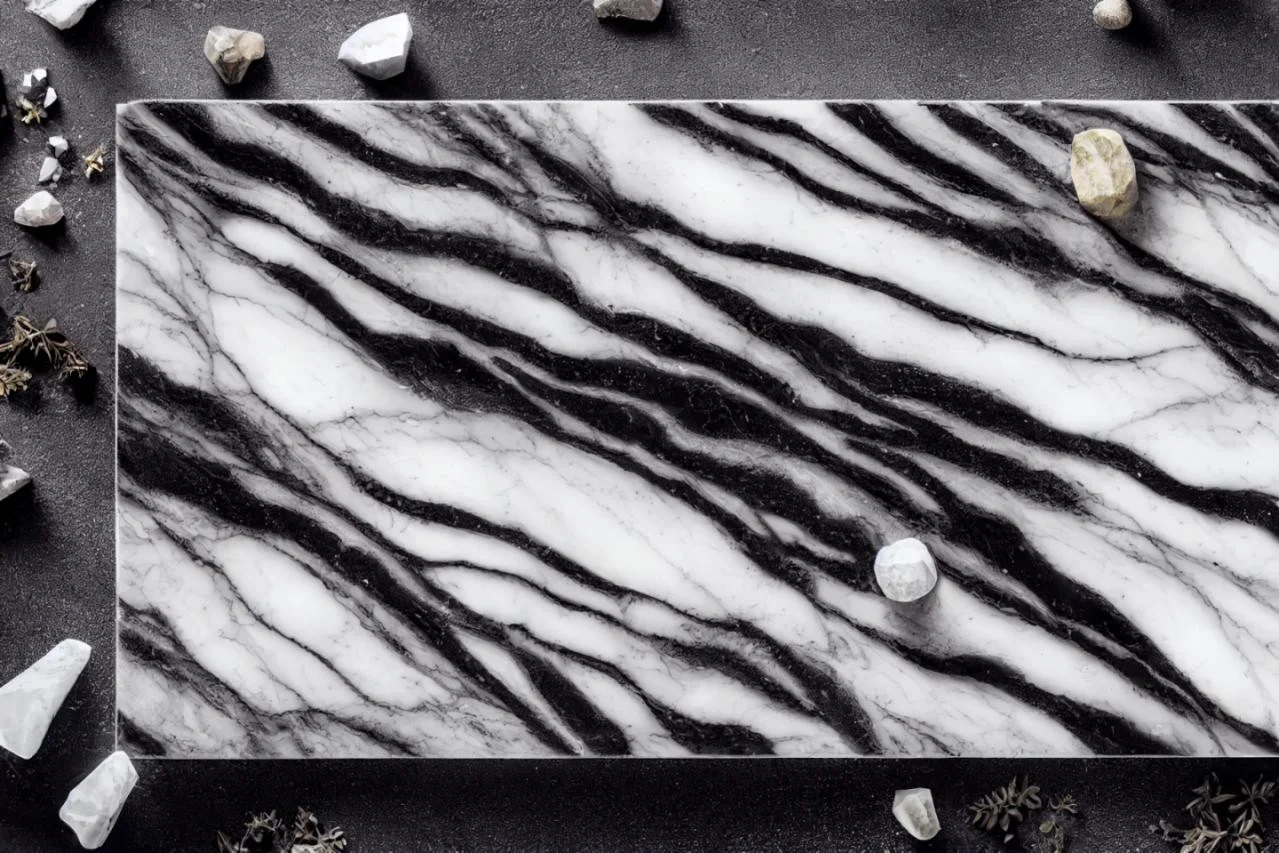
Sintered stone is a manmade countertop and surface material designed to offer the look of natural stones with strong everyday performance. It is known for being dense, nonporous, durable, and low maintenance, which makes it a popular choice for modern kitchens, bathrooms, outdoor spaces, and other high-use areas.

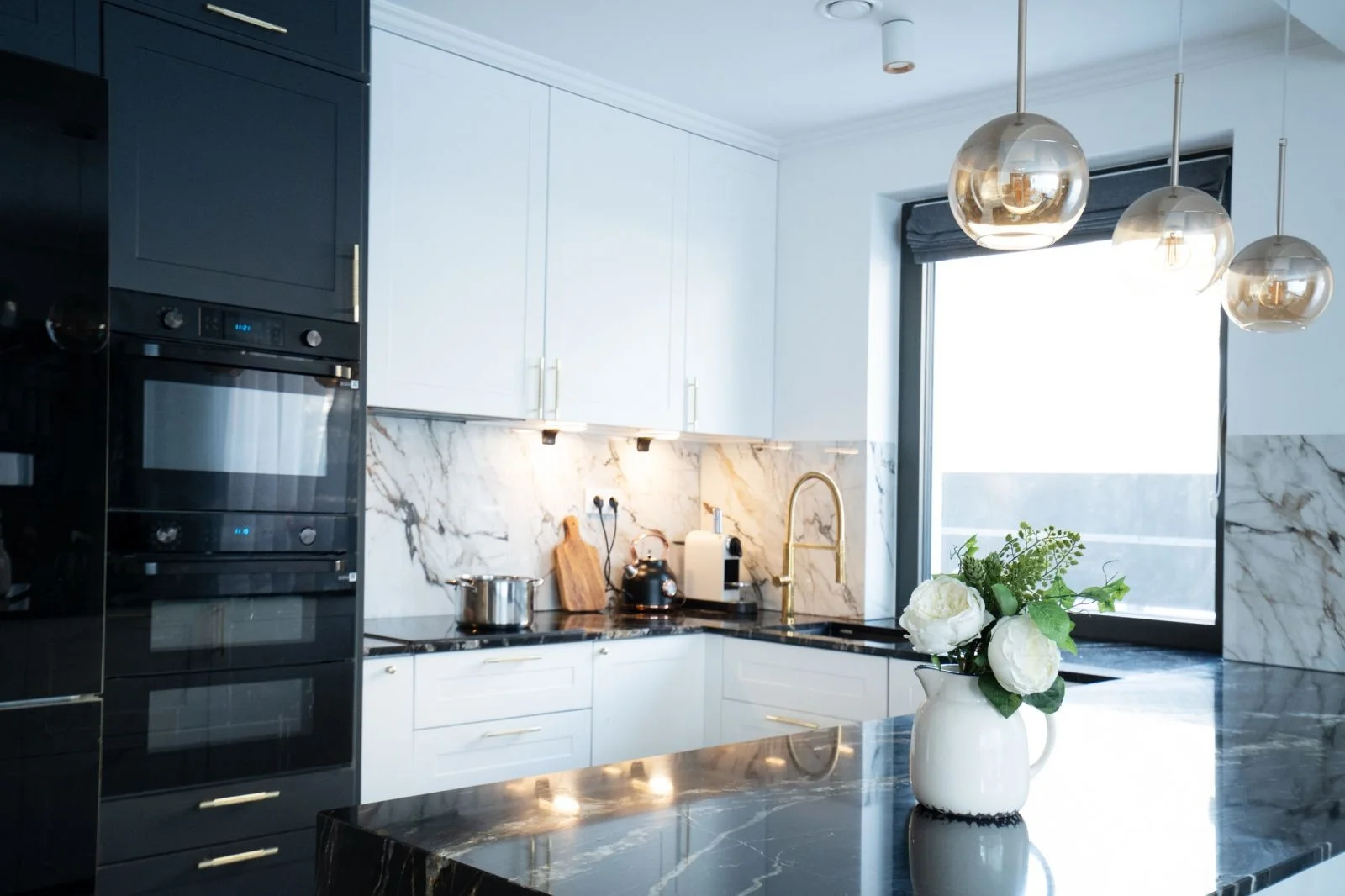
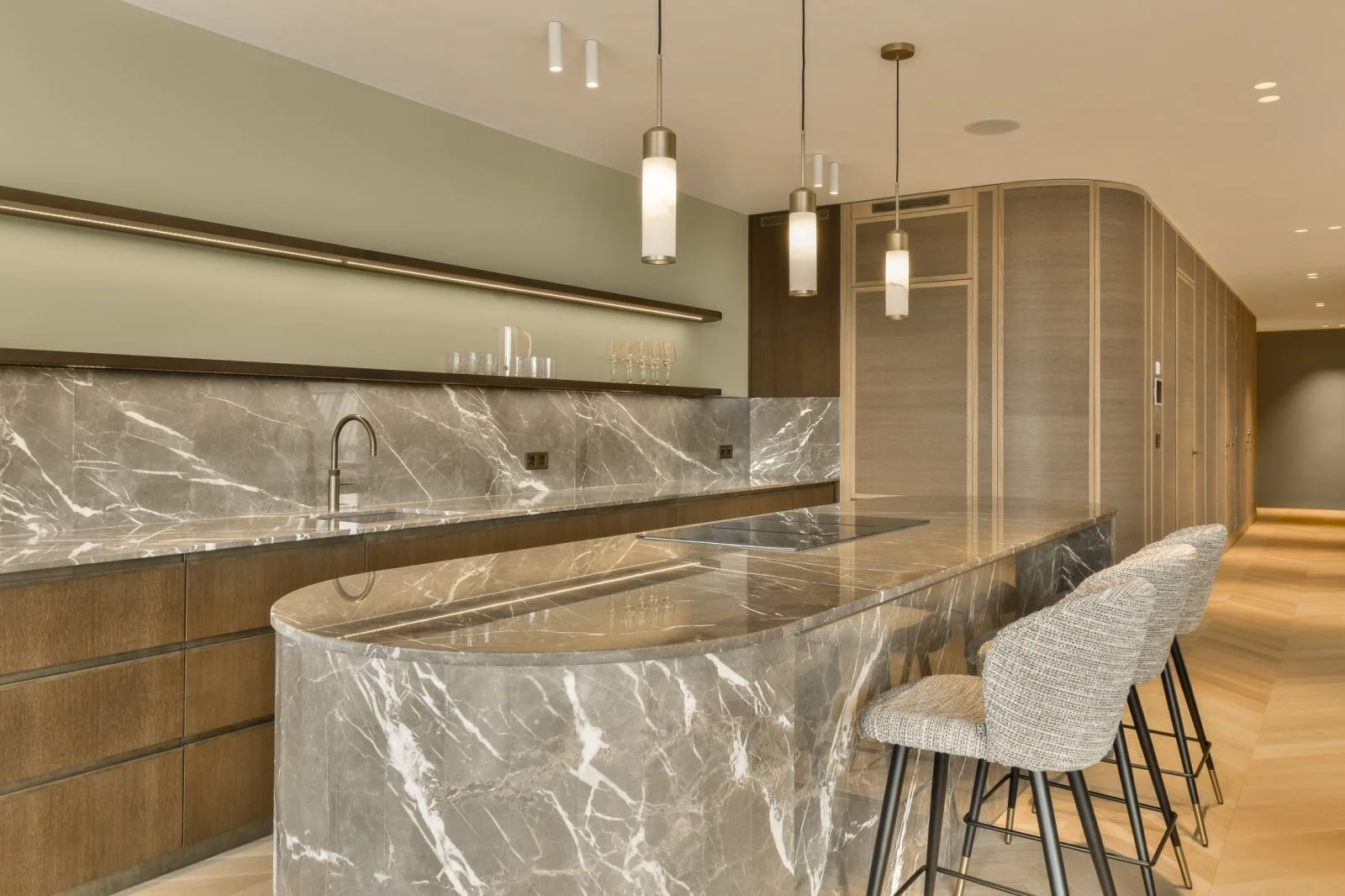
As a countertop material, it is often compared to quartz, porcelain, granite, and other engineered or natural surfaces. It can come in styles that resemble marble, concrete, metal, or natural stone, giving homeowners a wide range of design options while still providing a surface built for daily use.

How is Sintered Stone Made?

Sintered stone is made by combining natural minerals and stone particles and exposing them to extreme heat and high pressure. This manufacturing process is designed to mimic natural stone formation in a controlled environment. Instead of relying on resin binders, the minerals are compacted and bonded together to create a dense, durable slab.

This process gives sintered stone many of its main advantages as a countertop material. The heat and pressure help create a hard, nonporous surface that resists stains, scratches, moisture, heat, and UV exposure. Because it does not easily absorb liquids, sintered stone is also easy to maintain since it does not need sealing like many natural stone surfaces.

  • Quartz surfaces: 10 to 25 years, with some brands offering a limited lifetime warrantly.
  • Solid surface countertops: Commonly range from 10 to 15 years.
  • Plastic laminate countertops: Often range from 1 to 10 years, depending on the brand and product line.
  • Natural stone countertops: Coverage varies widely because granite, marble, and quartzite are natural materials. It may focus more on fabrication and installation than the stone itself.
Installers commonly provide around one year of workmanship coverage, though some companies provide longer durations. With Southern Stone, you get a lifetime service warranty for countertop installations.

What are the Advantages of Sintered Stone Countertops?

Sintered stone is valued for its durability, heat and stain resistance, low maintenance, and resistance to common countertop problems. Its dense, nonporous surface makes it a practical option for kitchens, bathrooms, outdoor spaces, and other high-use areas.

Heat Resistance

Sintered stone can handle high temperatures better than many countertop materials. This makes it useful around cooktops, outdoor kitchens, fireplace surrounds, and other areas where heat exposure is a concern.

Stain Resistance

Because the material is nonporous, liquids are less likely to soak into the surface. Spills from coffee, wine, oil, sauces, and other common kitchen items can usually be cleaned up before they leave stains.

Scratch Resistance

Sintered Stone has a hard surface that holds up well against normal daily use. While cutting boards are still recommended, the material is less likely to scratch than softer countertop options. 

Low Maintenance

No sealing required. Regular cleaning with mild soap and water is enough to keep the surface looking clean.

UV Resistance

Sintered stone resists fading from sunlight better than many other surfaces. This makes it a strong option for bright indoor spaces, covered patios, and outdoor kitchens.

Water Resistance

The nonporous surface helps prevent moisture from absorbing into the material. It is useful for bathrooms, laundry rooms, wet bars, and other areas where water exposure is common. 

Design Versatility

Sintered stone is available in many colors, patterns, and finishes. Some styles resemble marble, concrete, metal, or natural stone while still providing the performance benefits of an engineered material.

What are the Disadvantages of Sintered Stone Countertops?

Even with its durability, heat resistance, and low-maintenance appeal, sintered stone still has some drawbacks to consider. Before choosing it for your countertop, think about how the following disadvantages may affect your budget, installation, design options, and long-term expectations:

Cost

Sintered stone is a premium countertop material. It may cost more than laminate, some granite options, and other common countertop surfaces.

Requires Experienced Fabrication

It can be difficult to cut, edge, and install correctly. The project should be handled by a fabricator or installer with experience working with this specific material.

Difficult Repairs

Chips, cracks, or edge damage may be harder to repair cleanly than with some other countertop materials. In some cases, repairs may still be visible after the work is done.

Limited Edge Profile Options

It may not offer as many decorative edge profiles as materials like granite or quartz. Homeowners who want a highly detailed or traditional edge style may have fewer options.

Needs Proper Support

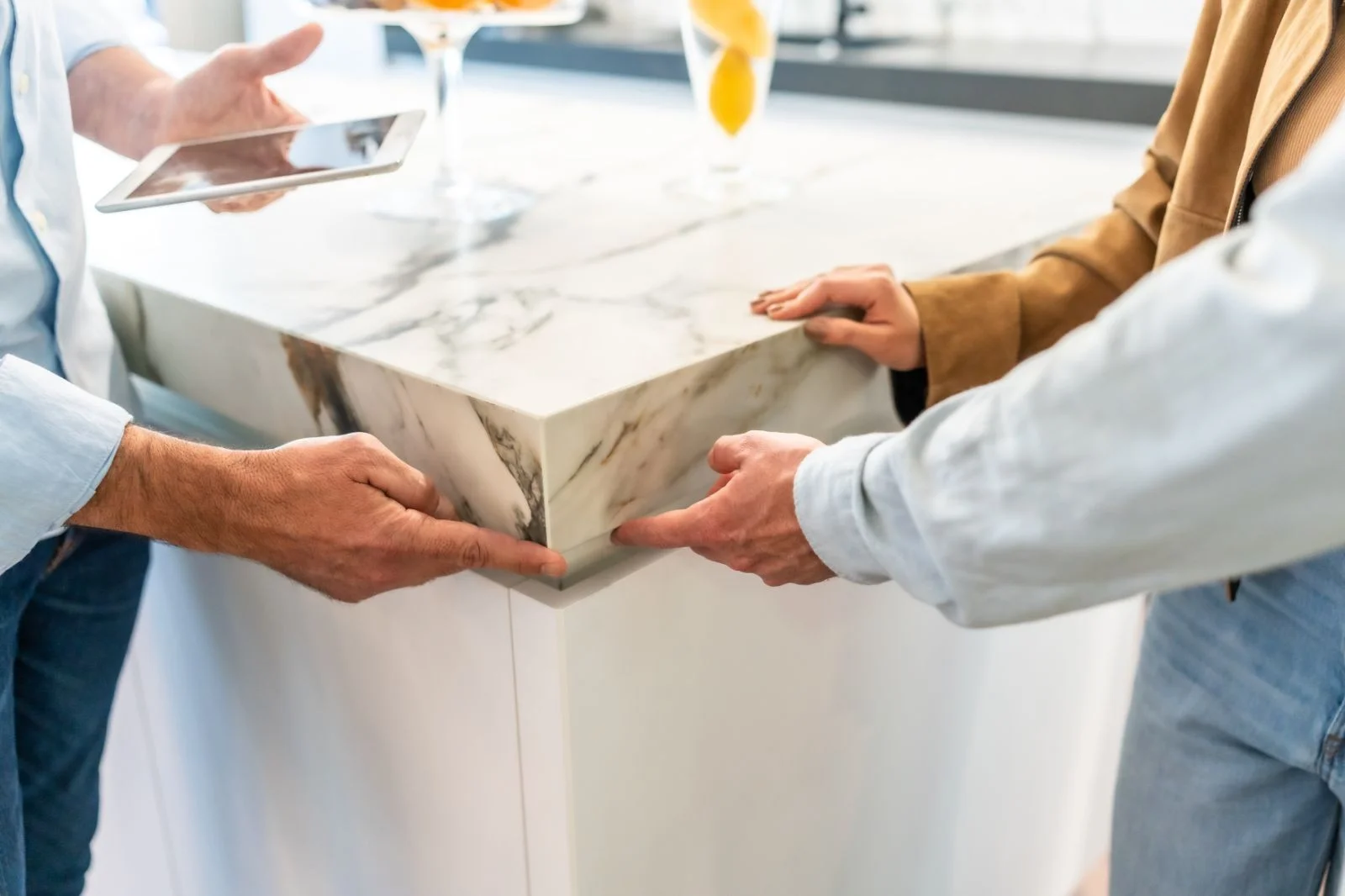
Like other slab materials, sintered stone needs a stable and properly supported base. Quality cabinets and proper cabinet installation are essential because poor cabinet support, unsupported overhangs, or movement under the slab can increase the risk of cracking.

Where Can Sintered Stone Be Used?

Sintered stone countertops are suitable for many applications due to their resistance to heat, stains, moisture, scratches, and UV exposure. Its durability makes it a practical option for indoor and outdoor spaces that need to withstand daily use, frequent cleaning, sunlight, and changing conditions. 

  • Kitchen countertops: It works well in kitchens where it’s expected to handle cooking, cleaning, spills, and daily prep work while still maintaining a positive visual impact.
  • Bathroom vanities: Its nonporous surface makes it useful as a bathroom countertop, where it will be exposed to water, soap, cosmetics, and cleaning products.
  • Outdoor countertops: Many sintered stone products can be used on outdoor patios and terraces and other living spaces because they resist sunlight, moisture, and temperature changes.
  • Laundry room countertops: It can hold up to moisture, cleaning products, and regular household tasks.
  • Wet bar countertops: Its stain and water resistance make it a strong option for drink prep areas, bar sinks, and entertaining spaces.
  • Heat-exposed surfaces: Sintered stone can be used near fireplaces, hearths, stovetops, and similar heat-exposed features because of its heat resistance.
  • Commercial countertops: It can also work well in offices, hospitality spaces, showrooms, and other commercial settings that need a durable, low-maintenance, and appealing surface.

Is Sintered Stone Right for Your Next Build?

Sintered stone may be right for your project if you want a durable, low-maintenance countertop that handles heat, moisture, stains, sunlight, and daily use well. It is especially useful if you will be installing it in your kitchen, bathroom, outdoor kitchens, laundry rooms, wet bars, and other high-use spaces.

Whether you’re planning a kitchen remodel, bathroom remodel, or new cabinet installation, contact us today to explore whether sintered stone is the right material for your space, goals, and budget.