
What Surface Materials Perform Best in Modern Bathrooms?

Modern bathroom designs use a mix of surface materials, from countertops and sinks to walls, backsplashes, and floors. Each surface has a different role, so the best material depends on the moisture, cleaning, foot traffic, and daily use it needs to handle. Understanding these differences makes it easier to choose materials that look good, last longer, and fit the way the space is used.

At Southern Stone & Cabinets, bathroom surface choices often begin in the vanity area, where countertops and cabinets have the biggest impact on both function and design. Still, it helps to look at the space as a whole so countertops, walls, and flooring work well together for a cohesive, durable finished space for a bathroom remodel.

What is the Best Bathroom Countertop Material?

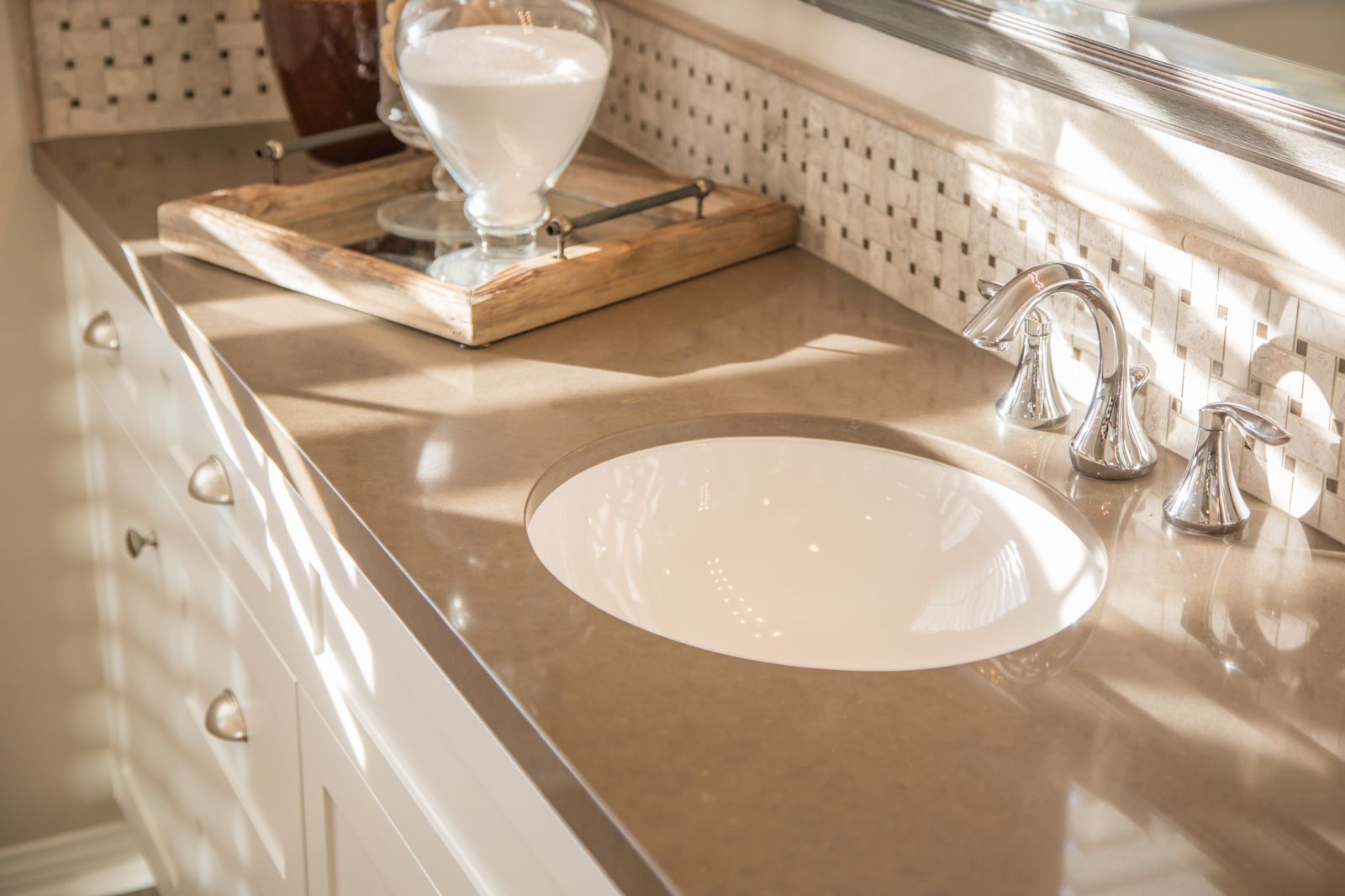
Quartz is considered the best material for bathroom countertops. It is durable, nonporous, and easy to maintain, which are all important in a space where countertops are exposed to water, soap, cosmetics, hair products, and frequent cleaning. Due to it being engineered with natural quartz materials, it does not require sealing, making it a practical choice for more frequently used spaces.

If you prefer natural stones, granite, marble, and quartzite are good options for a countertop in your bathing space. Granite countertops are known for its durability with heat resistance capabilities, unique patterns, and ability to hold up well with proper sealing. Marble has a refined appearance and natural veining that goes well in elegant designs. Quartzite offers a high-end natural look with greater durability than marble and offers resistance to stains.

What is the Best Material for Bathroom Sinks?

For bathroom sinks, porcelain is among the best overall materials for their durability, smooth surface, easy to clean, and resistance to everyday wear. Ceramic is another popular option with similar benefits, while solid surface sinks are useful when homeowners want integrated custom vanity tops with fewer seams and a clean, modern appearance.

Natural stone, glass, copper, and stainless steel sinks can work in specific designs and complement certain design trends, but they are more maintenance-sensitive. Natural stone has a high-end look but needs sealing, glass can show water spots, and metals need special care. In most bathroom designs, the sink and countertop material should be chosen together for the vanity to have a cohesive look.

What is the Best Material for Bathroom Walls and Backsplashes?

Porcelain tiles are the best overall material for bathroom walls and backsplashes. It is durable, water-resistant, easy to clean, and available in many styles. Porcelain tile walls work well in both vanity backsplashes and wetter wall areas, making it one of the most versatile choices. Ceramic tile walls are a great alternative for their affordability, ease of maintenance, and availability.

For a more high-end look, full slabs of quartz, granite, marble, or quartzite are excellent choices for backsplashes. These have seamless surfaces, reducing visible grout lines for a cleaner, heat-resistant, and have more continuous design. However, these are not recommended for shower or tub walls since these areas need surfaces with good waterproofing, slip resistance, and long-term moisture protection.

What is the Best Material for Bathroom Floors?

Porcelain tiles are generally recommended for bathroom floors due to their high water resistance, durability, ease of cleaning, and style availability. Some designs mimic natural stone, concrete, terrazzo, or wood while offering better moisture resistance and performance than other materials. For better traction in full baths, there are porcelain tiles with textured or matte finishes.

Other good bathroom flooring options include ceramic tiles and natural stone tiles. Ceramic tiles are great for those with a lower budget, but do not perform as well as porcelain tiles in wet areas. Although natural stone creates a beautiful high-end look and premium feel, it will require more frequent sealing as a flooring material.

Why Countertops and Cabinets Matter Most in the Bathroom Vanity Area

Custom vanity tops are the surfaces used the most during daily bathroom routines. Water, soap, toothpaste, cosmetics, hair products, and cleaning products often come into contact with their surface. Because of this, the material needs to be durable, resistant to moisture and stains, and easy to clean. A well-chosen countertop surface can help the vanity area stay cleaner and more functional over time.

Bathroom cabinets are just as important since they support the countertop, provide storage, and shape the space’s overall look. Cabinet doors, drawer fronts, and finishes are exposed to humidity, splashes, frequent handling, and everyday wear. When the countertop material and cabinet design are intentionally chosen together, the vanity performs better as a complete system and balances durability, storage, maintenance, and style.

How to Choose the Right Bathroom Surface Material

Choosing a surface material is not just about appearance. Each part of the room has different demands, from moisture and cleaning to foot traffic and daily use. The right material should fit the surface it is used on, the amount of maintenance the homeowner is comfortable with, and the overall design of the space.

Consider the Surface Location

Countertops, floors, walls, backsplashes, sinks, and shower areas each need different levels of protection. Floors need traction and durability, countertops need stain resistance, backsplashes need splash protection, and shower wall materials need to be able to handle direct water exposure.

Look at Daily Wear

Think about how often the space or the surface’s location is used and what the surface will come into contact with. A busy family bathing space or powder room needs surfaces that can handle frequent cleaning, moisture, grooming products, and regular use without wearing down quickly.

Match the Bathroom’s Style

The material should work with the rest of the room, including the cabinets, countertop, sink, fixtures, flooring, and wall finishes. Clean, consistent material choices can help the bathroom feel more polished and intentional. 

Balance Cost and Long-Term Value

The best material is not always the least expensive option. A surface that lasts longer, cleans easily, and fits the way the bathroom is used may offer better value over time than a cheaper surface that needs more upkeep or replacement sooner. 

Ready to Upgrade Your Bathroom Countertop and Cabinets?

Material selection for your bathroom surfaces becomes easier when each decision is tied to how the space is used every day. While every surface contributes to the final design, the vanity often brings the most important choices together in one place. The countertop, sink, backsplash, and cabinets need to work as a complete system, both visually and functionally.

The vanity area is often the best place to start your design because it connects the surfaces homeowners use most: the countertop, sink, backsplash, and cabinets. For homeowners planning a bathroom design project, Southern Stone & Cabinets offers services centered on bathroom countertops and custom vanity cabinets that help bring the overall design together.