
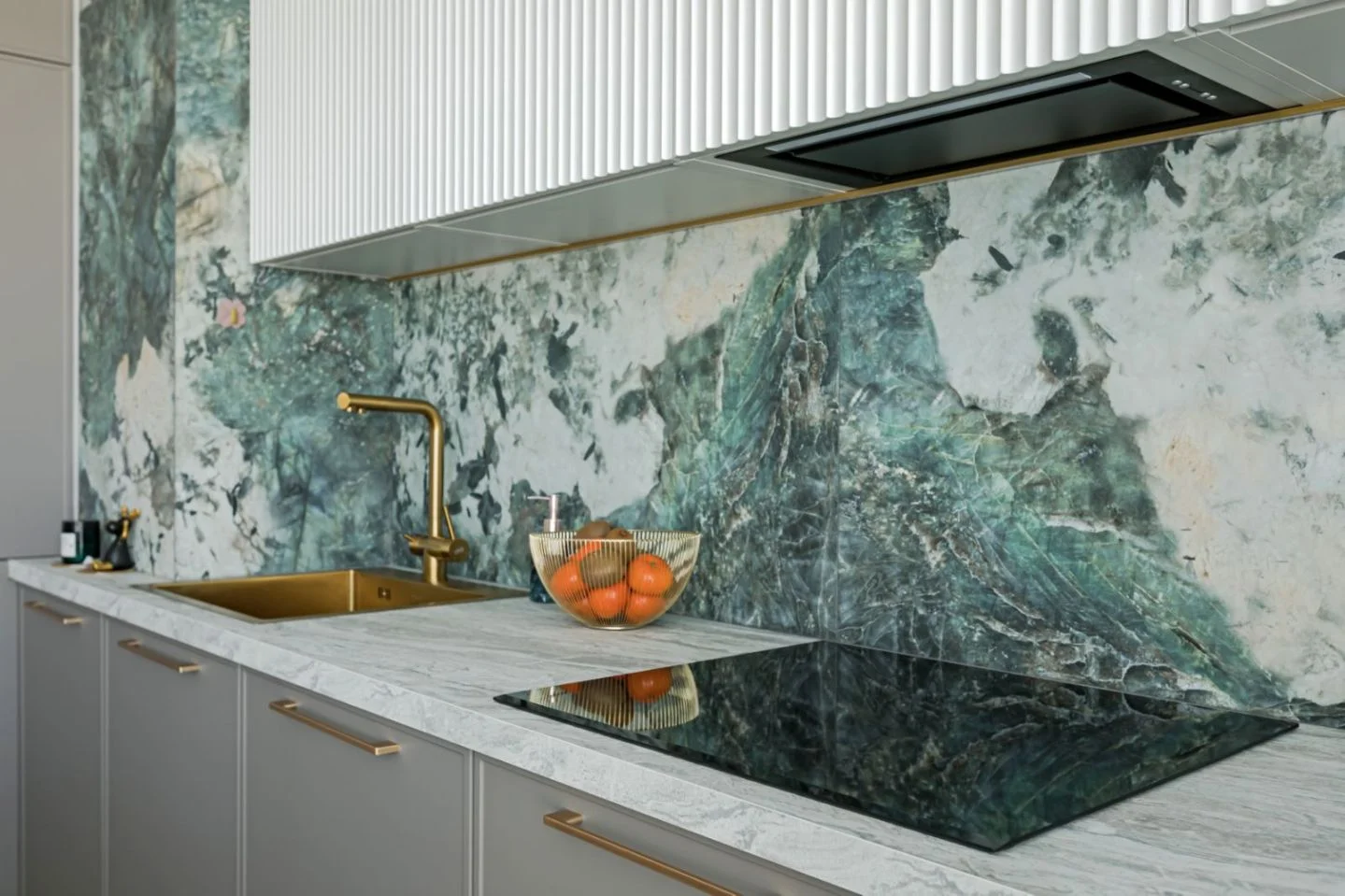
What is the Best Natural Stone for High-Traffic Kitchens?

A high-traffic kitchen needs a countertop that can handle daily cooking, frequent cleaning, spills, heat, and constant use without feeling too delicate. For busy kitchens, quartzite is the best natural stone countertop because it offers an excellent balance of durability, resistance to scratches and heat, and natural beauty.

Granite and quartzite is especially well-suited for homeowners who want the elegance of natural stone without choosing a surface that requires constant caution. At Southern Stone & Cabinets, homeowners can compare granite and quartzite slabs in person and find a countertop that complements a wide range of design styles while fitting both their kitchen style and everyday routine.

What Does a High-Traffic Kitchen Demand from a Natural Stone Countertop?

A high-traffic kitchen needs more than aesthetic appeal. It needs a surface that can withstand daily cooking, frequent cleaning, spills, heat, moisture, and constant movement. Natural stone can be an excellent choice for a heavily-used kitchen, but not every stone performs the same way.

Some stones offer natural veining and are dense and durable enough for everyday use, but not all of them are suitable for frequently used kitchens. Moreover, others require more maintenance, and other stones will inevitably develop a lived-in patina over time, even with the utmost care.

Durability for Daily Cooking and Prep

Countertops are used for meal prep, serving, cleaning, unpacking groceries, and gathering with family or guests. In kitchens that experience high traffic or use, these activities happen more often.

Over time, repeated use can accelerate wear, especially if the surface is not durable enough for the household’s routine. That’s why a kitchen that sees a lot of use needs a countertop that can withstand daily use without delicate treatment.

Resistance to Spills, Stains, and Moisture

Kitchen countertops are exposed to coffee, wine, cooking oil, sauces, juice, and water every day. This makes stain resistance an important factor when choosing a countertop material, especially when the material is stone.

For natural stone, this matters because some of them are porous to some degree. A high-activity kitchen needs a countertop that can handle everyday spills and moisture without becoming difficult to clean or maintain.

Protection Against Heat and Impact

High-traffic kitchens often involve hot pans, baking sheets, coffee makers, air fryers, slow cookers, and heavy cookware. Even with careful use, countertops are regularly exposed to heat and impact.

Over time, dropped pots, dragged appliances, or repeated contact with hard objects can chip edges or damage corners. A frequently used kitchen needs a surface that can withstand these types of wear even more, or else it will only take a short time before the countertops start looking worn.

Resistance to Etching from Acidic Foods

Natural stone countertops can also be affected by acidic foods and cleaners. Lemon juice, vinegar, tomatoes, citrus, and harsh cleaning products can cause etching, which leaves dull, permanent marks on the surface of certain natural stones.

This matters in a busy kitchen because these ingredients are used often during cooking, serving, and cleanup. This type of space needs a countertop that can handle frequent food prep without showing damage too easily.

Easy Cleaning and Long-Term Maintenance

A busy kitchen may need to be wiped down several times a day after cooking, serving, and gathering. If the countertop requires too much special care, it can quickly become frustrating for the household.

Natural stone should usually be cleaned with mild soap, warm water, or a pH-neutral stone cleaner. If you want this type of material in such a kitchen, it should be a surface that fits into a regular cleaning routine without constant extra maintenance.

Appearance That Holds Up Over Time

In a high-use kitchen, the countertop needs to look good after years of daily use. Scratches, dull spots, stains, chips, and etching can become more noticeable when a surface is used heavily.

Some homeowners like the character natural stone develops over time, while others want a cleaner, newer-looking surface. For a kitchen that experiences frequent use, a countertop should match the household’s lifestyle and meets long-term appearance expectations.

How Do Different Natural Stones Perform in High-Traffic Kitchens?

Not all countertop materials respond to heavy kitchen use in the same way. Some natural stones are dense, hard, and well-suited for daily use, while others are more porous, softer, or more sensitive to acidic foods. For a bustling kitchen, the best countertop is one that can withstand everyday wear without requiring frequent surface treatment.

an African Rainbow granite countertop surface that features multi-colored veining in beige, light gray, russet, and blue

Granite

Granite countertops are one of the most reliable natural stone options for busy kitchens. It is durable, heat-resistant, and strong enough to handle daily cooking, serving, and cleaning. Because it is harder than marble, limestone, and travertine, it generally holds up better against scratches and everyday wear.

Granite is porous to some degree, so it should be properly sealed to help protect against stains. With routine cleaning and periodic sealing, granite is a practical choice for homeowners who want a natural stone countertop that balances beauty, durability, and long-term performance.

an Arabescus White marble countertop surface that features swirl and vein details in gray, dove, and charcoal over the white background

Marble

Marble is a beautiful natural stone, but it is not the most practical choice for high-traffic areas in your home. It is softer than granite and quartzite, which means it can scratch more easily with daily use. Marble is also vulnerable to etching from acidic foods like lemon juice, vinegar, tomatoes, and citrus.

For homeowners who love a classic, elegant look and do not mind natural patina, marble can still be used in a kitchen. However, it needs more care and is better suited for those who are comfortable with visible signs of wear over time.

an Alabaster White quartz countertop surface that features long gray veins over the soft white background

Quartz

Quartz is often grouped with stone countertops, but it is an engineered surface rather than a natural stone slab. It is made with quartz sand, resins, and pigments, which give it a consistent appearance and strong stain resistance. Because quartz is nonporous, it does not need sealing and is easy to clean.

In high-traffic kitchens, quartz resists spills, stains, and everyday messes. Its main limitation is heat. Hot pans, baking sheets, and small appliances can damage the surface resin, so trivets and hot pads are important. Quartz is a strong, low-maintenance option, but it is not technically natural stone.

a Belvedere quartzite countertop surface that features dramatic gold veins over the deep jet background

Quartzite

Quartzite is one of the best natural stone choices for a kitchen that sees a lot of use. It is very hard, durable, and more scratch-resistant than softer stones like marble, limestone, and travertine. Many homeowners also like quartzite for its light, elegant, marble-like appearance with better performance.

Quartzite still needs proper sealing because it can be porous, but it is a strong option for busy kitchens where cooking, cleaning, and gathering happen often. For homeowners who want the beauty of natural stone with excellent durability, quartzite is the top recommendation.

a Charcoal Soapstone quartz countertop surface that features gray highlight details over the blue-gray background

Soapstone

Soapstone is a natural stone with a softer, smooth feel and a distinct matte appearance. Unlike many other natural stones, it is nonporous, so it does not need sealing and is naturally stain-resistant. This makes it appealing for homeowners who want a lower-maintenance natural stone surface.

However, soapstone is softer than granite and quartzite, so it can scratch and dent more easily. Many homeowners choose soapstone because they like the aged, lived-in look it develops over time. It can work well in a frequently-used kitchen if the homeowner is comfortable with patina.

an Arctic Gray limestone countertop surface that features a neutral design with veining details

Limestone

Limestone has a soft, warm, natural appearance, but it is not the best choice for a kitchen that experiences heavy use. It is more porous and softer than granite or quartzite, which makes it more vulnerable to stains, scratches, and general wear.

Limestone is also sensitive to acidic substances, so it can etch when exposed to lemon juice, vinegar, tomatoes, citrus, or harsh cleaning products. While limestone can be beautiful, it requires more care and is better suited for lower-traffic areas or homeowners who accept visible aging.

an Aldem sintered stone countertop slab that has gray tones and wood like pattern

Sintered Stone

Sintered stone is not natural stone, but it is compared with stone countertops because of its mineral-based composition and slab format. It is made by compacting and heating minerals to create a dense, durable surface. In high-activity kitchens, sintered stone performs extremely well.

It is highly resistant to stains, heat, scratches, moisture, and UV exposure, and typically does not require sealing. The main concern is chipping along edges or corners if the surface is hit hard. With proper fabrication and installation, sintered stone is one of the strongest low-maintenance options for busy kitchens.

a torreon travertine countertop that has a warm neutral color toned surface

Travertine

Travertine is a natural stone with a rustic, textured look, but it is generally not ideal for well-used kitchens. It has a porous surface, is softer than granite and quartzite, and contains natural pits or voids that may be filled during fabrication.

Like marble and limestone, travertine is sensitive to acidic foods and cleaners, which can cause etching from common kitchen ingredients. It can work in kitchens where a weathered, old-world look is desired, but it requires more maintenance and is not the most practical choice for heavy daily use.

Alternatives to Quartzite Countertops in High-Traffic Kitchens

Quartzite is the best natural stone for high-traffic kitchens because it is durable, heat-resistant, scratch-resistant, and beautiful. Still, other materials may be worth considering depending on your budget, style, and preferred maintenance.

Best Natural Stone Alternative: Granite

Granite is a strong alternative for homeowners who want natural stone but may not need the softer, marble-like appearance that quartzite provides. It is also a practical choice when the goal is to balance performance, availability, and long-term value.

Because granite comes in many colors and patterns, it gives homeowners more flexibility when matching cabinets, flooring, and overall kitchen style. It is a good option for kitchens where the homeowner wants the natural look of stone without choosing a more delicate material.

Best Low-Maintenance Alternatives: Quartz and Sintered Stone

Quartz and sintered stone are better suited for homeowners who are open to engineered or manufactured surfaces in exchange for easier upkeep. These materials are especially helpful for busy households that want fewer concerns about sealing, staining, or day-to-day cleaning.

Quartz is a good choice for homeowners who want a consistent pattern and a wide range of design options. Sintered stone is a good choice for those who want a highly durable surface with strong resistance to kitchen wear. Both offer a stone-inspired look with practical benefits for high-traffic zones.

Explore Countertop Options with Southern Stone & Cabinets

Quartzite may be the best natural stone for high-traffic kitchens, but the right choice still depends on your design goals, maintenance preferences, and daily routine. Seeing materials in person can make it easier to compare colors, patterns, finishes, and overall feel.

At Southern Stone & Cabinets, our team can help you explore quartzite, granite, quartz, sintered stone, and other countertop options for your kitchen. Contact us today to get started.